How Enterprise Marketing Teams Use AI to Make More Video
The enterprise teams making more video with AI are not replacing real footage with synthetic avatars. They use AI to strip out the busywork around real video: repurposing, captions, transcripts, first-cut edits, and the coordination that eats the calendar, so a small team ships far more. Here is what actually works, where AI still falls short, and how to turn "we need more AI" into video your audience believes.
Why "use more AI" keeps landing on video
If your boss is asking for more AI and you are not sure where to point it, video is the obvious answer, because it is visible, it is in demand, and it is where the busywork is thickest. Every executive has been told to "do something with AI." Most of the easy wins in a marketing org are invisible, an internal workflow here, a smarter report there. Video is different. More video, produced faster, is something a CMO can see and a board can feel.
The catch is that most "AI video" advice sends you straight to the wrong tool. It points you at generators that spin up a synthetic presenter reading a script. That is not the win, and for enterprise brand content it is usually a mistake. The real win is quieter and much bigger.
Where AI actually helps in enterprise video
AI is a genuine force multiplier on the work around your footage, not a replacement for the footage itself. These are the wins that compound for a marketing team:
- Repurposing. Turn one long interview or event recording into a dozen short cuts for LinkedIn, YouTube, sales, and recruiting. This is the single fastest way to multiply output from video you already have.
- Captions and transcripts. Automatic, accurate captions on everything, plus transcripts that make your library searchable and your content accessible.
- First-cut edits. AI can rough-assemble a first pass, pull the best moments from an hour of footage, and hand an editor a head start instead of a blank timeline.
- Reusable templates and motion. Branded intros, lower-thirds, and formats that apply themselves, so editing is assembly, not reinvention.
- Search and tagging. AI tags your footage library so nobody re-shoots something you already have.
Notice the pattern. None of these fake the content. They remove the hours of manual work that sit around real footage, which is exactly where a small team loses its time.
Where AI falls short, and why it matters for a brand
Synthetic avatars and cloned voices are fine for a throwaway internal explainer and wrong for anything your brand rides on. A customer testimonial, an executive message, a brand story, these work because a real person is in them. Enterprise audiences can feel the difference, and the credibility cost of getting caught faking it is high for a company that sells on trust.
So the line is simple. Use AI to accelerate real video. Do not use it to counterfeit real people. The teams that get this wrong flood their channels with synthetic content that technically exists and quietly convinces no one.
AI removes the busywork, but not the bottleneck
Here is the part the tool demos skip: AI speeds up the edit, and the edit was never where your video was actually dying. Watch where a video really stalls inside a big company. It is not the cut. It is the gaps between people.
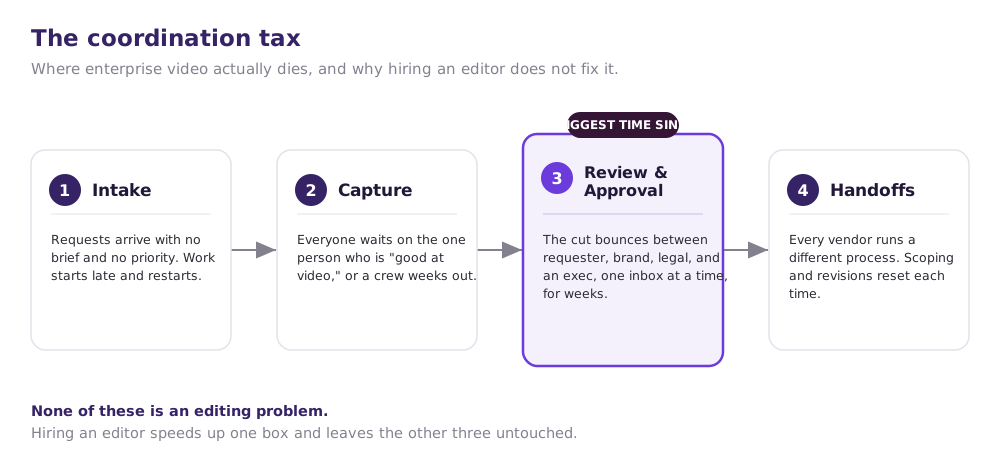
The request comes in with no brief and sits. Capture waits on a scarce specialist. The cut bounces between brand, legal, and an exec for three weeks. A new vendor resets the whole process. AI makes the editing step faster and does nothing for the other three. You end up with a faster edit inside the same slow machine.
That is why the teams pulling ahead pair AI with a real system: one intake, capture separated from editing, a governed review loop, and a predictable clock. AI does the busywork, the system removes the coordination tax, and together they let a small team ship like a much bigger one. This is what we mean by video enablement, and it is how you scale video without hiring a team.
What this looks like in practice
Same team, dramatically more video, because AI and the system did the heavy lifting instead of new headcount. At Vidloft we promise a 48-hour turnaround on edits once work is submitted, and we typically deliver in about a day. AI accelerates the production. The workflow keeps it predictable.
One of our customers, a multinational forestry and building-materials manufacturer, shows the compound effect. Even with their own in-house production team, a single video took around three months to go from request to finished. Run as a system, that cycle dropped to about two days. Across every project we have produced for them, 100% have come in under our 48-hour promise, and we have averaged a 15.9-hour turnaround. Not because a synthetic avatar replaced their team, because the busywork and the coordination got engineered out.
Turning "we need more AI" into a real plan
You do not need an AI video strategy. You need to point AI at the busywork and put a system around the rest. A path that actually works:
- Start with what you already have. Run AI repurposing and auto-captions across your existing footage. Instant multiplication, zero new production.
- Fix the intake and the review loop, so faster edits actually reach the world faster.
- Separate capture from editing, so you are not bottlenecked on one specialist.
- Keep synthetic video out of anything brand-facing. Use it only for disposable internal explainers.
Do that and you can honestly tell your boss you are using AI to make more video, and mean it. If you want to see it run against your own backlog, start a pilot and we will map where AI and a real system would move the needle for you.
Frequently asked questions
Can AI replace a video production team?
No. AI is excellent at the work around real footage, repurposing, captions, transcripts, and first-cut edits, but it cannot replace real footage of real people. Customer stories, executive messages, and brand content still need real capture and expert editing.
Is AI-generated video good enough for enterprise brand content?
Synthetic avatars and cloned voices are fine for a quick internal explainer, but they are the wrong call for testimonials, executive comms, or brand storytelling. Enterprise audiences feel the difference, and the credibility cost is high. Use AI to accelerate real video, not to fake it.
What is the fastest AI win for a marketing team drowning in video requests?
Repurposing and auto-captions on the footage you already have. Turning one long asset into a dozen short cuts multiplies your output with zero new production, and it works the same day.
How do enterprise teams use AI to make more video without a bigger team?
They point AI at the busywork (repurposing, captions, rough edits) and put a real system around the rest (one intake, capture separated from editing, a governed review loop, a predictable clock). AI speeds the work, the system removes the coordination that actually slows video down.
Does AI video hurt brand credibility?
Synthetic, AI-generated presenters can, when they replace real people in brand-facing content. Real footage accelerated by AI does not. The safe rule is to use AI on the production process, not to counterfeit the people on screen.
Stop Editing.
Start Scaling.
Your content backlog is a goldmine.
Let us help you mine it.